A screen showing the same head-in-a-corner gaming layout for hours can feel like digital wallpaper. That is exactly why popular streaming formats are shifting toward experiences built around conversation, movement, participation, and stronger visual hooks.
The interesting part is that these formats do not always require expensive production; some of the strongest performers simply give viewers a better reason to stay. Current streaming data also shows that non-gaming content has become a serious part of live viewing, with Just Chatting and IRL continuing to attract substantial audiences on Twitch.
1. Just Chatting and IRL Are Winning With Human Attention

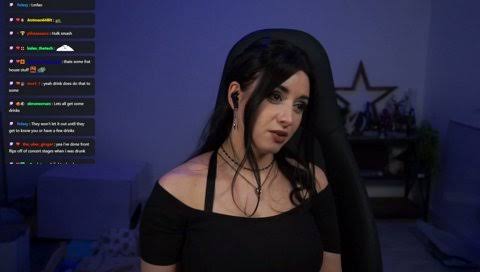
The first lesson is simple: viewers do not always need a game to justify staying in a stream. Twitch officially treats Just Chatting and IRL as content categories alongside games, music, art, and special events, making the format easy to discover through category browsing and recommendations. The appeal is the low production ratio, because a creator can turn an ordinary conversation, outing, reaction, or event into several hours of live content without building a complicated set.
Why the Just Chatting Category Keeps Working
The Just Chatting category works because the subject can change without forcing the audience to leave. A creator might discuss a trending story, react to clips, answer chat questions, then move naturally into another topic. That flexibility creates more opportunities for audience interaction than a rigid broadcast built around one task.
IRL Streaming Turns Movement Into Content
In Real Life IRL streaming adds another layer because the environment becomes part of the show. A walk through a city, convention visit, restaurant stop, shopping trip, or live event can create unpredictable moments that are difficult to reproduce in a studio. The trade-off is technical reliability, since mobile connections, audio noise, lighting, privacy, and safety become more important.
The Production Ratio Is Surprisingly Efficient
The real advantage is production ratio, not simply low cost. A creator can spend less time preparing graphics and more time creating moments that viewers actually remember. That makes IRL especially attractive for smaller creators who cannot compete with large gaming productions on visual polish.
This doesn’t mean gaming is becoming irrelevant. Twitch still has enormous gaming audiences, but recent industry reporting shows non-gaming categories such as Just Chatting and IRL continuing to expand their share of viewing. For creators, the practical takeaway is to treat personality and context as production assets rather than relying entirely on gameplay.
2. Popular Streaming Formats Need More Than Algorithmic Recommendation

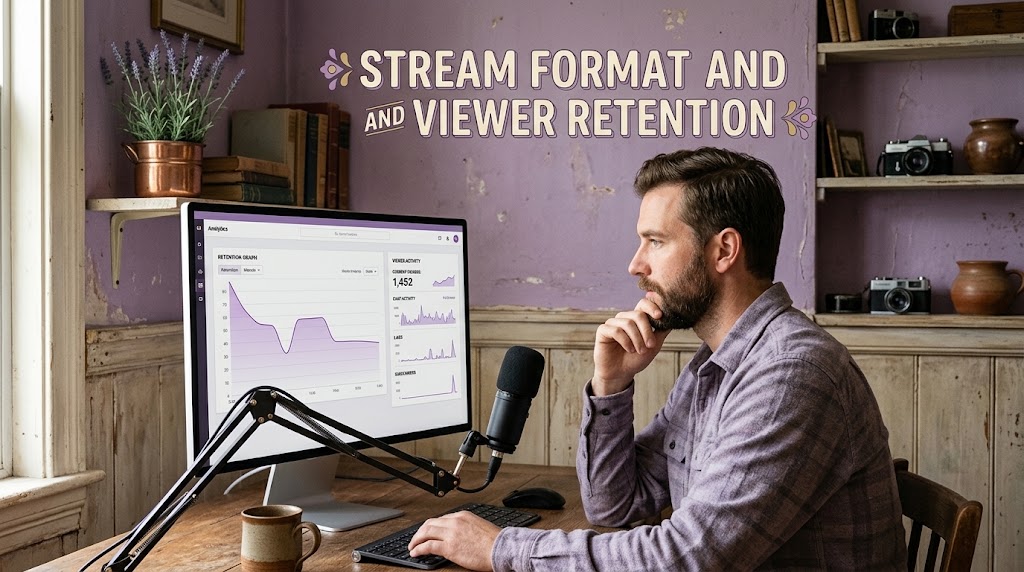
There is a dangerous myth that one format can simply “beat the algorithm.” In reality, algorithmic recommendation is largely a response to viewer behaviour, personalization, and content performance rather than a permanent preference for one category. YouTube explicitly says its recommendation system evaluates signals such as whether viewers choose to watch, how long they stay, and whether they appear satisfied.
Why Viewer Retention Matters More Than Format Hype
A format can attract clicks and still fail if viewers leave quickly. YouTube’s live analytics specifically tracks average view duration, peak concurrent viewers, total watch time, and retention moments, giving creators a practical way to identify where interest collapses.
The Best Formats Create Repeatable Moments
A strong livestream should have moments that viewers can anticipate, clip, discuss, or participate in. Just Chatting can achieve this through debates and reactions, while IRL can use locations and unexpected encounters as natural story beats. Gaming can do the same through challenges, competitions, speedruns, or audience-controlled events.
Packaging Still Decides the First Click
Even the strongest live concept needs clear packaging. A vague title such as “Hanging Out Tonight” gives a new viewer little reason to enter, while a specific premise communicates what is happening immediately. YouTube confirms that titles, thumbnails, and the opening seconds help communicate value and influence whether viewers choose to watch.
One useful strategy is to build a stream around a recognizable premise rather than a generic category. For example, “Exploring Tokyo’s Night Markets With Chat” gives IRL a destination and narrative, while “I Let Chat Decide Every Match” gives gaming a clear interactive mechanic. This approach also creates stronger material for clips and follow-up content after the broadcast ends.
3. Choosing a Streaming Format Based on Cost, Interaction, and Longevity


The smartest choice is not necessarily the format with the biggest headline numbers. It is the format that matches a creator’s strengths, production capacity, and ability to keep viewers returning. YouTube’s own guidance emphasizes sustained audience satisfaction and regular viewers rather than chasing a single supposedly favored format.
Choose Just Chatting for Personality-Led Channels
Pick Just Chatting if the creator’s personality is the primary product. It requires relatively little equipment, supports frequent audience interaction, and allows topics to evolve during the broadcast. The weakness is competition, because personality alone can be difficult to differentiate without a strong recurring concept.
Choose IRL for Story and Unpredictability
IRL is stronger when the environment can provide the story. Travel, events, street interviews, food exploration, and behind-the-scenes access can create moments that feel impossible to script. The downside is that production becomes less predictable, so reliable audio and connectivity matter more than fancy overlays.
Choose Gaming When the Game Itself Adds Stakes
Gaming remains the better choice when the game creates natural tension. Competitive matches, ranked climbs, speedrunning challenges, tournaments, and viewer-controlled mechanics give audiences a reason to follow the outcome. The key is adding a creator-specific angle instead of simply broadcasting gameplay.
The Best Strategy May Be a Hybrid
Hybrid programming is often the most practical long-term approach. A creator might begin with Just Chatting, move into gameplay, then finish with a short community segment, creating several distinct phases without requiring three separate broadcasts. That structure also gives the algorithmic recommendation system more content signals while allowing viewers to discover the creator through different interests.
For creators building a broader content ecosystem, the format should also connect with the community strategy rather than exist in isolation. A useful comparison of community-led and broadcast-style livestreaming can help clarify where your format belongs, especially if audience interaction is becoming central to the channel. community livestreams vs broadcast livestreams
Final Verdict
There is no universal winner among popular streaming formats. Just Chatting offers flexibility, IRL offers real-world unpredictability, and gaming offers built-in stakes, while hybrid formats can combine their strongest qualities. The better decision is to measure click-through behaviour, retention, returning viewers, and production effort over several streams instead of judging success from one viral broadcast.
Quick Recommendation
- Best for personality: Just Chatting
- Best for storytelling: IRL
- Best for competitive tension: Gaming
- Best for experimentation: Hybrid
- Best metric to watch: Audience retention and returning viewers


Paolo Sarmiento has worked as an entertainment editor, community moderator, and livestream reviewer for digital publications in Southeast Asia.
His coverage includes gaming broadcasts, music performances, talk shows, educational channels, and creator-led events. Rather than ranking content by viewer count alone, he also considers production consistency, audience trust, originality, accessibility, and the quality of community interaction.