Community livestreams vs broadcast livestreams is not only a comparison of format. It is also a comparison of feeling. One live room can make viewers feel noticed, welcomed, and part of a shared moment. Another can look polished and professional, but still feel like watching from far away.
Both formats can be useful. A broadcast-style livestream is strong when the event needs structure, authority, and a clean delivery. A community livestream works better when the main value comes from closeness, conversation, and repeat connection. The difference is not about which one is always better. The difference is about what kind of relationship the live room wants to build.
In 2026, viewers are surrounded by endless content. They do not only choose what to watch. They choose where they want to spend their attention. Sometimes they want information. Sometimes they want entertainment. Sometimes they want a room that feels familiar enough to return to after a tiring day.
The Emotional Difference Between A Room And A Stage

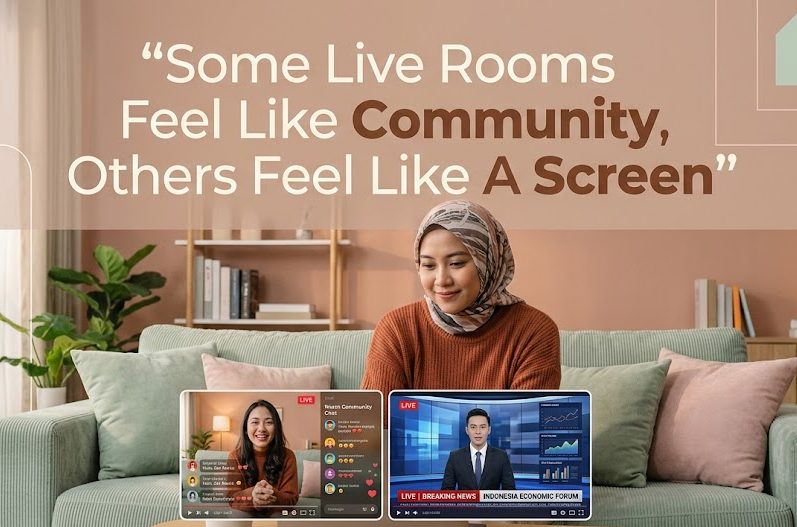
A broadcast livestream often feels like a stage. The speaker, event, or brand stands in front, and viewers receive the message. A community livestream feels more like a room. People may still come for the host, but they also stay because of the shared atmosphere.
Broadcast Livestreams Feel Controlled And Distant
Broadcast livestreams usually have a cleaner structure. There may be a scheduled program, formal opening, planned segments, limited interaction, and a clear message. This format works well for launches, conferences, announcements, ceremonies, interviews, and professional events.
The strength is control. The session feels organized. The viewer knows someone is managing the flow.
But the weakness is distance. Viewers may feel like they are watching through glass. They can see everything, but they cannot touch the moment.
That distance is not always bad. For serious events, it can feel appropriate. But for creators or brands that want loyalty, a purely broadcast-style live session can feel too cold.
Community Livestreams Feel Messier But Closer
Community livestreams are usually less perfect. The host may respond to familiar names, laugh at inside jokes, remember viewer stories, or pause for chat reactions. The session may not move as smoothly as a broadcast, but it can feel more human.
The strength is closeness. Viewers feel like they are not only watching a person. They are returning to a place.
This format can work well for creators, small brands, learning groups, hobby communities, gaming audiences, music fans, wellness rooms, and niche interest spaces.
A community live room may not impress everyone at first glance. But for the right viewer, it can feel strangely comfortable.
The Comparison That Matters For Viewer Loyalty
Popularity is not always about reach. Some live rooms become popular because many people join once. Others become valuable because the same people keep returning.
The Viewer Role Changes Everything
The biggest difference between community and broadcast livestreams is the viewer’s role.
| Comparison Point | Community Livestreams | Broadcast Livestreams |
|---|---|---|
| Viewer role | Participant, regular, familiar name | Audience member, observer, attendee |
| Main feeling | Warmth, belonging, shared space | Authority, information, presentation |
| Chat style | Personal, active, relational | Limited, formal, sometimes secondary |
| Best use | Loyalty, niche audience, repeat viewing | Announcements, events, launches, official updates |
| Weakness | Can feel messy or too insider | Can feel distant or one-directional |
In a broadcast livestream, viewers often ask, “What information will I get?”
In a community livestream, viewers may feel, “I know this place.”
That emotional difference affects retention. People may forget a polished session after it ends. But they often remember how a familiar live room made them feel.
Returning Viewers Need More Than Good Content
Good content can attract viewers once. A sense of connection can bring them back.
This is why some small live rooms have loyal audiences even without massive production. The viewers return because the room has memory. The host remembers names. The chat has rhythm. The jokes continue from last week. The audience feels like the session would be different without them.
A broadcast livestream rarely creates that feeling unless it intentionally adds community layers.
The Strength Of Broadcast Livestreams Still Matters
It would be unfair to say community livestreams are always better. Broadcast livestreams have their own power, especially when clarity and professionalism matter more than intimacy.
Formal Events Need A Strong Center
Some live sessions should not feel too casual. A company announcement, public briefing, major interview, educational conference, or product reveal may need a broadcast structure.
A broadcast format helps keep the session focused. It reduces chaos and protects the message from being swallowed by random comments.
This is useful when the audience expects:
- Clear information.
- Reliable timing.
- Professional delivery.
- Limited distraction.
- A polished replay experience.
In this case, too much community-style interaction can actually weaken the session. Not every live moment needs to feel like a living room.
The Problem Starts When Broadcast Feels Emotionless
Broadcast livestreams lose emotional power when they ignore the viewer completely. If the session feels like a video file pretending to be live, viewers may wonder why they should watch in real time at all.
A live broadcast should still have presence. Even a formal livestream can include small human signals: acknowledging the audience, explaining the flow, using clear transitions, inviting limited questions, or adding a short live reaction segment.
The goal is not to become messy. The goal is to avoid feeling lifeless.
The Warmth Of Community Livestreams Needs Boundaries
Community livestreams can feel warm, but warmth without boundaries can become confusing. New viewers may feel excluded if the host only talks to regulars. The chat may become too full of inside jokes. The session may lose structure because everything depends on conversation.
New Viewers Need A Doorway Into The Room
A strong community livestream makes old viewers feel remembered without making new viewers feel invisible.
That balance matters.
The host can create a doorway by saying things like:
- “For anyone new here, we usually talk about live content trends every week.”
- “If this is your first time joining, welcome. We are currently discussing viewer habits.”
- “Regular viewers may remember this topic from last session, but I’ll give quick context.”
These small lines help new viewers enter the room without feeling late to a private party.
Community Should Not Replace Purpose
Some community livestreams become too dependent on chat. The host talks to viewers, but the session has no clear topic. That can work for loyal fans, but it may not grow well.
A community live room still needs a reason to exist. The audience may come for the warmth, but they stay longer when the session also gives them something useful, comforting, entertaining, or memorable.
Warmth is powerful. But warmth with direction is stronger.
The Hybrid Format Often Wins
The most popular live rooms often borrow from both sides. They use broadcast structure to stay clear and community energy to feel alive.
Structure Creates Trust While Interaction Creates Feeling
A hybrid livestream may have:
- a clear opening
- planned sections
- audience greetings
- pinned context
- selected chat moments
- Q&A breaks
- recap at the end
- replay-friendly structure
This gives viewers the best of both formats. The session does not feel chaotic, but it also does not feel cold.
The broadcast side tells viewers, “This live has a purpose.”
The community side tells viewers, “You matter inside this purpose.”
That combination can make a live room easier to watch and easier to return to.
The Right Mix Depends On The Audience
A business audience may prefer more structure. A creator audience may prefer more personal interaction. A learning audience may need both. A music audience may want emotional closeness. A shopping audience may need trust and clarity.
The strongest livestreams understand the emotional expectation before choosing the format.
The Live Rooms People Remember
Community livestreams vs broadcast livestreams is really about how viewers experience distance. A broadcast can feel impressive but far away. A community live room can feel smaller but closer. Neither format is automatically better, but each creates a different kind of memory.
Some viewers remember what was announced. Some remember what was taught. Some remember what was sold. But many remember the live rooms where they felt included, even quietly.
That is why comparison matters. Popular livestreams are not only built from topics, features, or schedules. They are built from emotional design. The best live room knows whether it needs to be a stage, a room, or something gently in between.


Paolo Sarmiento has worked as an entertainment editor, community moderator, and livestream reviewer for digital publications in Southeast Asia.
His coverage includes gaming broadcasts, music performances, talk shows, educational channels, and creator-led events. Rather than ranking content by viewer count alone, he also considers production consistency, audience trust, originality, accessibility, and the quality of community interaction.